Canari-ML: North-Atlantic zonal wind forecasting codebase












Warning
This is a highly experimental codebase with constant changes with every development release, and is not ready for production use.
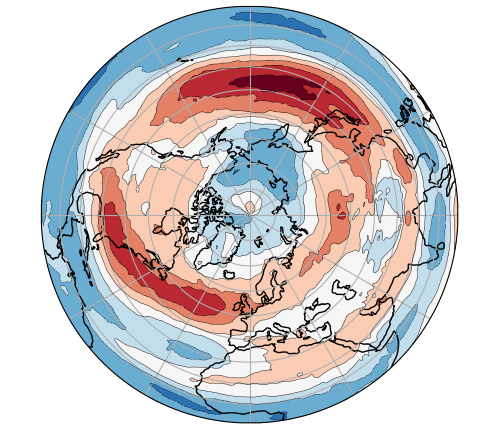
Canari-ML is a machine learning library built with PyTorch Lightning for wind forecasting (zonal wind at 700hPa) across the North Atlantic.
Welcome to the documentation for Canari-ML, a machine learning library built with PyTorch Lightning for wind forecasting (zonal wind at 700hPa) across the North Atlantic.
This documentation provides a foundation for configuring and running the training process. For more details on specific configuration options, refer to the Hydra documentation.
This codebase uses Hydra for configuring different options. For more details on specific configuration options. It enables the user to change default options for download/preprocess/train/predict/postprocess/plot via either command line overrides, or via yaml config files (in a highly configurable and reproducibile manner), or even both.
This documentation will provide detailed guides on configuring models, preprocessing data, postprocessing and visualising the prediction results.
What is Canari-ML?
Canari-ML provides tools and models for processing environmental data and making wind forecast predictions. It is designed to be used in conjunction with the environmental-forecasting initiative which is used for data download and for majority of the pre-processing steps to prepare the source data for training and prediction.
Features
- Models: Currently, a reference UNet model is implemented for wind forecasting.
- Preprocessing: Utilities for loading, reprojecting, preparing and caching ERA5 datasets for ML training.
- Integrated Experiment Tracking: Track experiments using either Tensorboard, or WandB integration.
- Prediction: Functions to train and predict on new data.
- Visualisation: Tools for visualising the results of predictions and model training.
Quick start
To begin using Canari-ML:
- Installation:
- Usage: Run the following command to see available entry points:
License
CANARI-ML is licensed under the MIT license. See LICENSE for more information.
We hope you find Canari-ML useful! Let's get started with the installation guide.
Contributors
